Photograph supplied to PIVF. Visible photographer credit: Gireesh Gopi (gireeshgopi.com).
Beyond the spectacle of Kerala’s poorams is a story of neighbouring villages, visiting deities and people who know how to listen. Follow the connection between Peruvanam and Arattupuzha, near Cherpu in Thrissur.
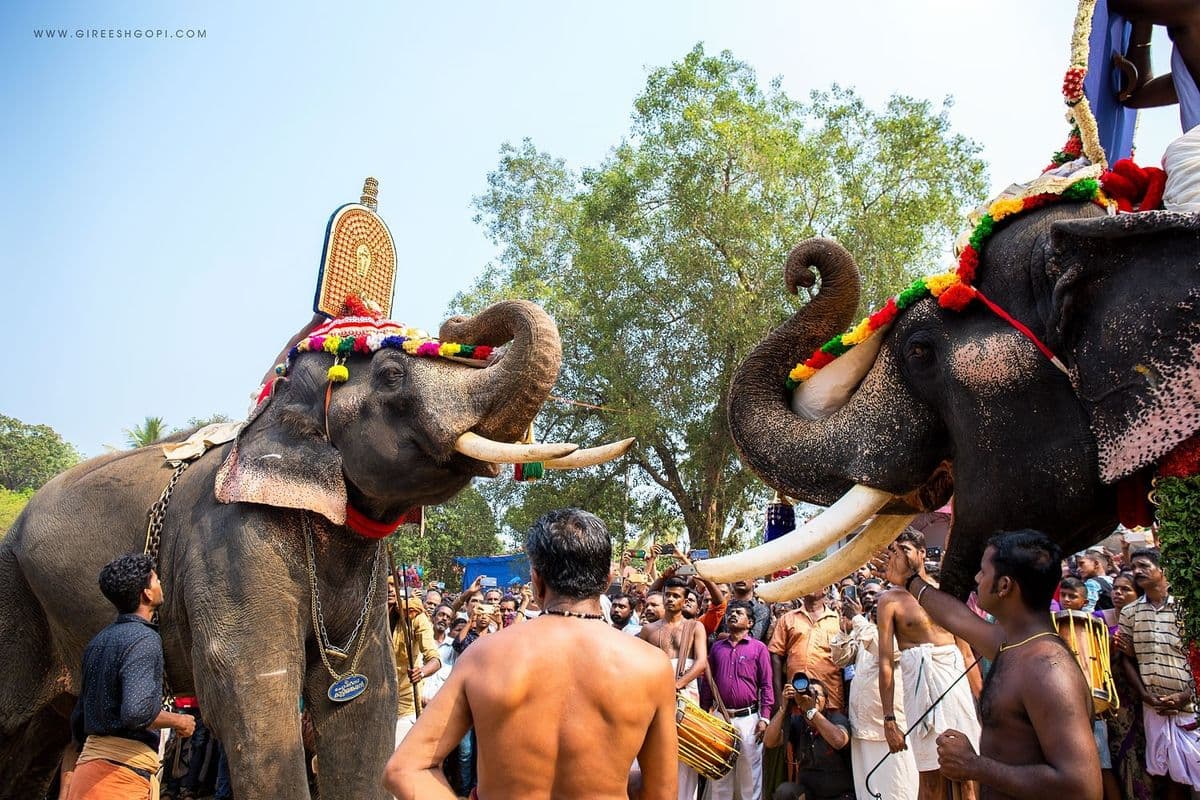
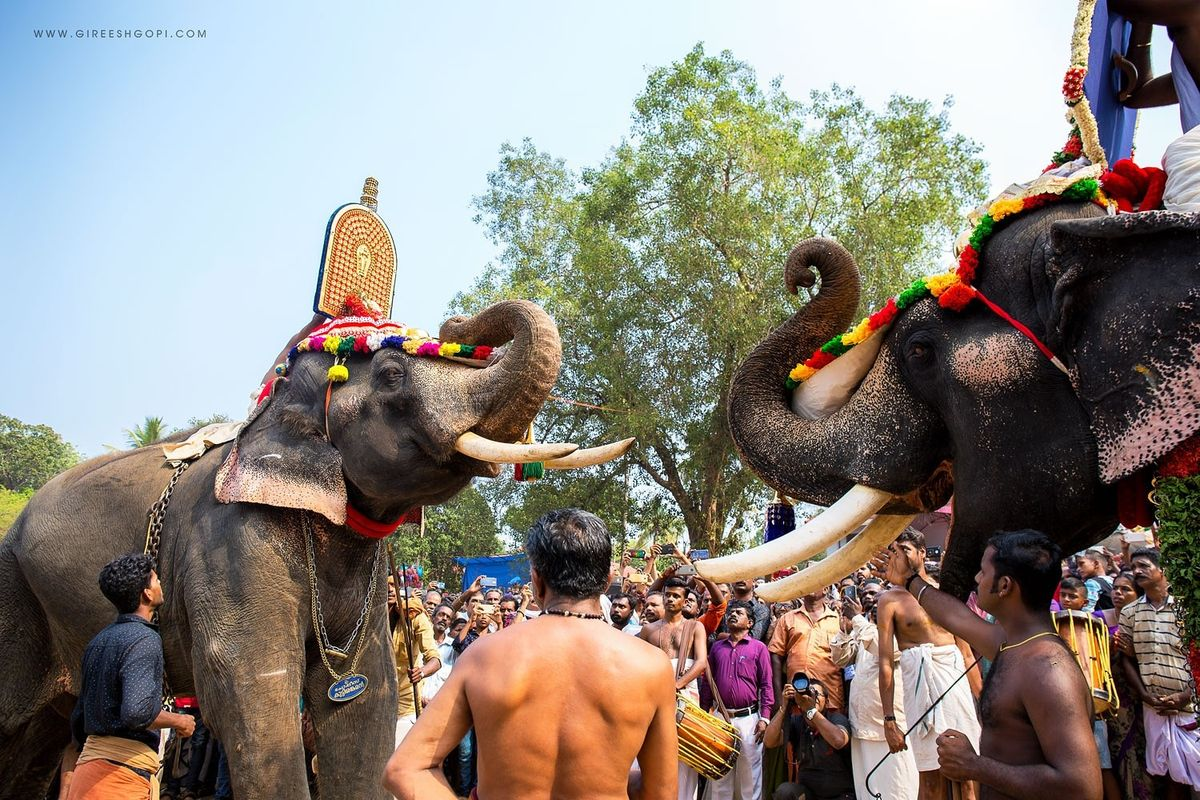
Look closely at the daylight photograph in this story. The elephants catch your eye first, of course: their raised trunks, curved tusks and decorated foreheads. Then the people come into focus. There are musicians, attendants and onlookers, some watching the animals, others looking towards something beyond the frame. The picture is crowded, but it is not only a picture of a crowd. It is a reminder that a pooram is made by many kinds of attention at once. Someone is playing. Someone is caring for an animal. Someone is waiting for the next part to begin.
Two places, one connected tradition
For many people outside Kerala, ‘pooram’ means Thrissur Pooram: the famous gathering on Thekkinkadu Maidan, its elephants and changing parasols. Travel into the villages near Cherpu, however, and the word opens onto another landscape. Peruvanam and Arattupuzha belong to an older festival tradition, one that draws neighbouring temples into a shared cycle of processions and gatherings. They are connected, but they are not interchangeable names for one venue. Understanding that distinction makes a visit more interesting. You begin to see a relationship between places rather than a single spectacle with a famous label.
A festival is not just an annual performance. It is a recurring appointment between communities.
Kerala Tourism describes Peruvanam Pooram as more than 1,400 years old and Arattupuzha as the ‘Mother of all Poorams’. These are the ways the festivals’ long histories are presented in published cultural accounts. Their sacred stories also belong to living belief, and should be read as such rather than treated as independently proven dates for every event. The deeper point is easier to grasp: the villages have been gathering around these traditions for a very long time. A festival is therefore not just an annual performance. It is a recurring appointment between communities.
The host, and the arriving guests
Peruvanam Pooram takes place at Peruvanam Temple in the Cherpu area of Thrissur district. The temple is dedicated to Shiva, but Kerala Tourism describes its presiding deity as the host and silent spectator of the pooram, while processions arrive from other temples. That detail gives the gathering a particular character. The host does not need to be the centre of every movement. Visitors bring their own presence, their music and their traditions into a shared space. The festival’s identity lies partly in this act of receiving, not merely in the grandeur of what is displayed.
At Arattupuzha, the Sree Sastha Temple is the focal point. The gathering of deities from neighbouring temples is described as Devamela, the conclave of gods, and is widely associated with the idea of Devasangamam. It is an evocative way to think about the festival: each procession arrives with a place behind it. People do not come as an anonymous audience alone. They bring the attachments of their villages, and the meeting makes those connections visible. You can appreciate that human geography without pretending to know every ritual or the meaning of every sequence on your first visit.
Give the music time
The music asks for the same patience. Peruvanam is particularly associated with Pandi and Panchari Melam; Arattupuzha is known for Sasthavinte Melam. The names matter, because ‘drumming’ is too small a word for traditions with their own structures and practices. But beginners need not turn listening into an examination. Start with what you can hear: a pattern, a reply, the changing force of the ensemble. Watch how the players stay together. Notice how an experienced listener recognises a transition before you do. Curiosity is a better entrance than the fear of getting something wrong.
A short video can show the force of a melam, but it cannot give you the whole experience of duration. These performances unfold over time. A phrase you barely noticed at first can become the thing you are waiting to hear again. The crowd’s response is part of that experience, though it is never a reason to push forward or ignore the space needed by musicians, attendants and elephants. A good place to listen is also a safe one. Follow organisers’ directions, stay outside animal movement areas and let the procession pass without trying to turn every moment into a close-up.
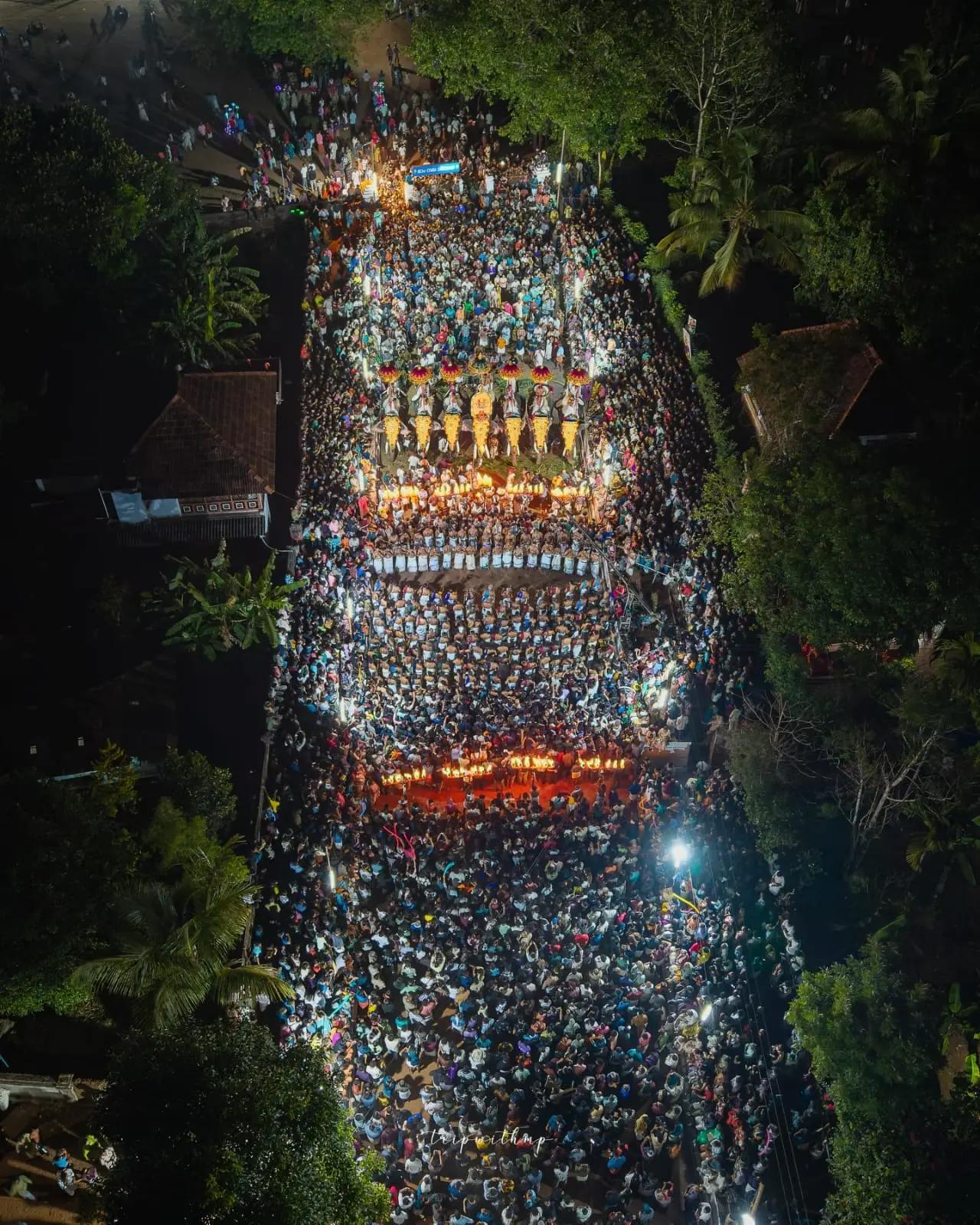
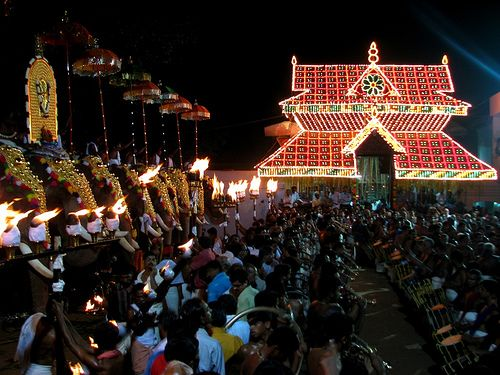
The night photograph changes the mood. Torch flames lift above the gathering. Parasols line the procession. The illuminated temple frontage draws an outline against the darkness, while people and instruments fill the foreground. We have kept the caption descriptive rather than assigning the photograph to a specific ritual without confirmation. Even so, the image shows something words often miss: how much of a festival happens in the spaces between the most famous moments. Waiting, standing beside someone, following a sound, finding your companions again — these small experiences are also what people carry home.
Before you plan a pooram visit
If you want to visit Peruvanam or Arattupuzha Pooram, begin with the current programme, not an old social-media poster. The festival cycle follows the Malayalam calendar, and dates and timings must be checked each year with the relevant temple or organisers. Kerala Tourism places Peruvanam Pooram in Meenam, around March–April. The two locations need their own travel planning; a photograph labelled ‘Thrissur festival’ is not enough to tell you where to arrive. Confirm transport, plan how you will return after a late performance, and check entry and photography rules before entering a place of worship.
Cherpu provides a useful way to understand the wider region. It is associated not only with these festival traditions but also with wood-carved elephants and with learning at Thiruvullakkavu. The arts do not exist in isolation from daily work and family life. A sculpture, a rhythm and a first written letter all involve knowledge being passed from person to person. That is why a visit can be rewarding outside the pooram season too. You will not find the same spectacle every day, but you can begin to understand the surroundings in which it becomes possible.
A different gathering in January
The Peruvanam International Village Festival belongs to this region, but it is a separate event from the temple poorams. PIVF 2027 takes place on 8–10 January at Sreelakam Lifelong Learning Institute in Cherpu. Its conversations, books and arts offer another way of spending time with a village and its guests. There is no need to claim that a modern festival replaces an older tradition. The connection is more modest, and more meaningful: a place with a long practice of gathering and listening has room for new conversations as well.
Perhaps that is the best reason to look beyond the most familiar festival photograph. Peruvanam and Arattupuzha are not simply quieter alternatives to a famous city pooram. They have their own hosts, routes, rhythms and relationships. Come with respect for those differences, and the spectacle begins to acquire depth. You still remember the elephants and torchlight. But you may also remember the way a musician listened to another musician, or the moment a waiting crowd recognised a beat together. The villages have gathered; for a little while, you have been allowed to listen with them.
Sources & further reading
Spend a little longer with the village
About the author
PIVF Journal
Culture & Heritage
Stories about the places, arts and reading life around the Peruvanam International Village Festival, drawing on published cultural references and PIVF’s festival material.