A quiet village near Cherpu in Thrissur, an ancient Shiva temple, a pooram older than most of Kerala's famous festivals — and a rhythm that has passed from hand to hand for centuries. This is the story of Peruvanam, and why PIVF calls it home.
Arrive in Peruvanam on an ordinary afternoon and you may wonder what the fuss is about. Coconut palms lean over red laterite lanes. A tea shop at the junction hums with gossip. Children cycle home from school past tiled roofs and quiet paddy fields. It looks like a hundred other villages in Thrissur district. Then evening comes, someone lifts a pair of sticks, and the village begins to speak in its own language.
That language is the chenda — the tall cylindrical drum of Kerala — and in Peruvanam it is spoken fluently. The man who poured your tea, the teacher who just locked the school gate, the young boy watching from a wall: any of them may be part of a drumming family whose sound has filled temple grounds for generations. Here, rhythm is not a show put on for visitors. It is how the village keeps time.
PIVF did not bring culture to Peruvanam. It invited the world to sit down in a place that has always lived it.
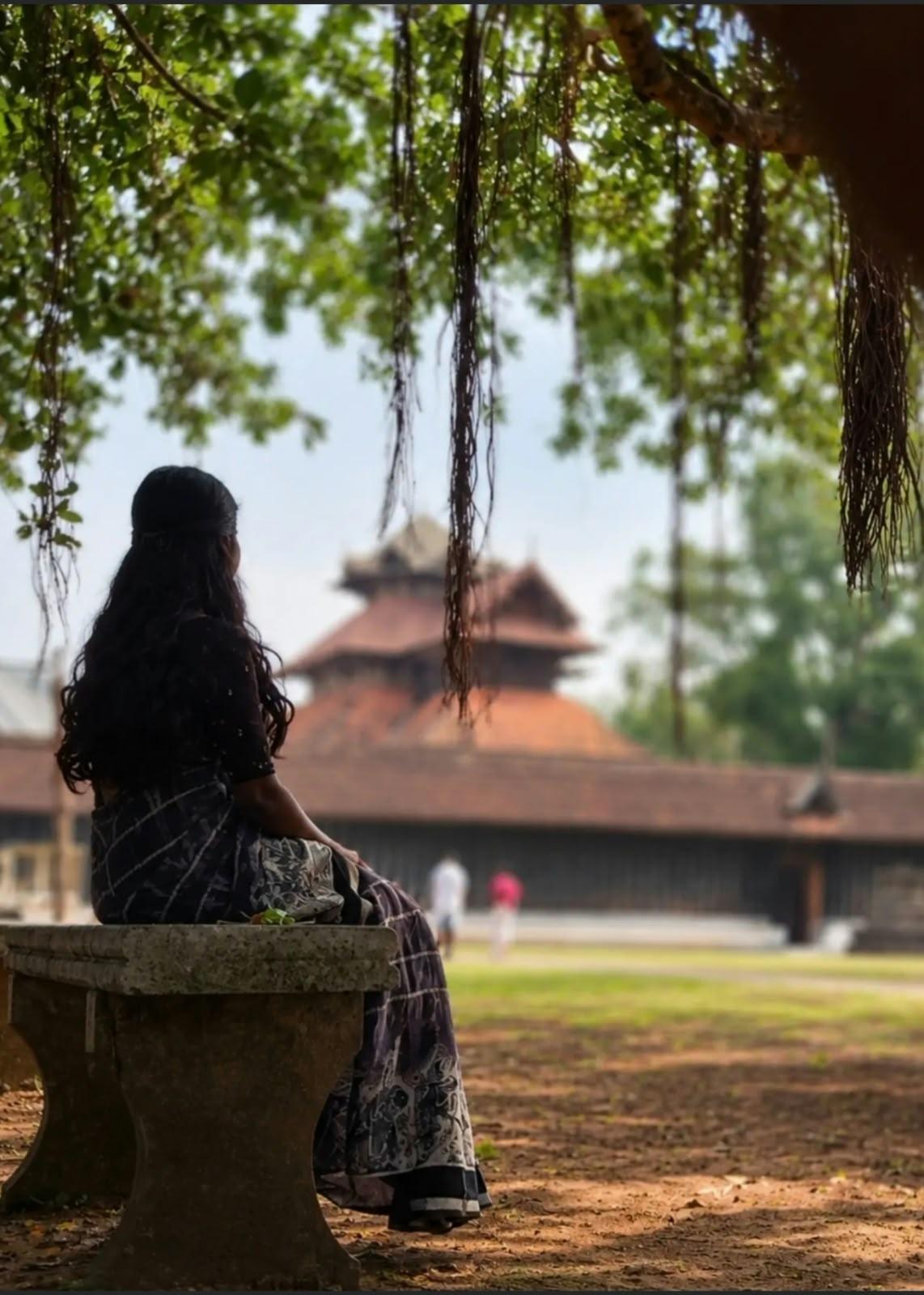
At the heart of it all stands the Peruvanam Mahadeva Temple, one of the oldest temples in central Kerala. Its sanctum rises in an unusual, tall, layered form that you will not easily forget, and for centuries it was the meeting point for the villages around it. Weddings, harvests, quarrels and celebrations — so much of local life has turned around this temple that the elders still speak of it simply as 'the temple', as if there could be no other.
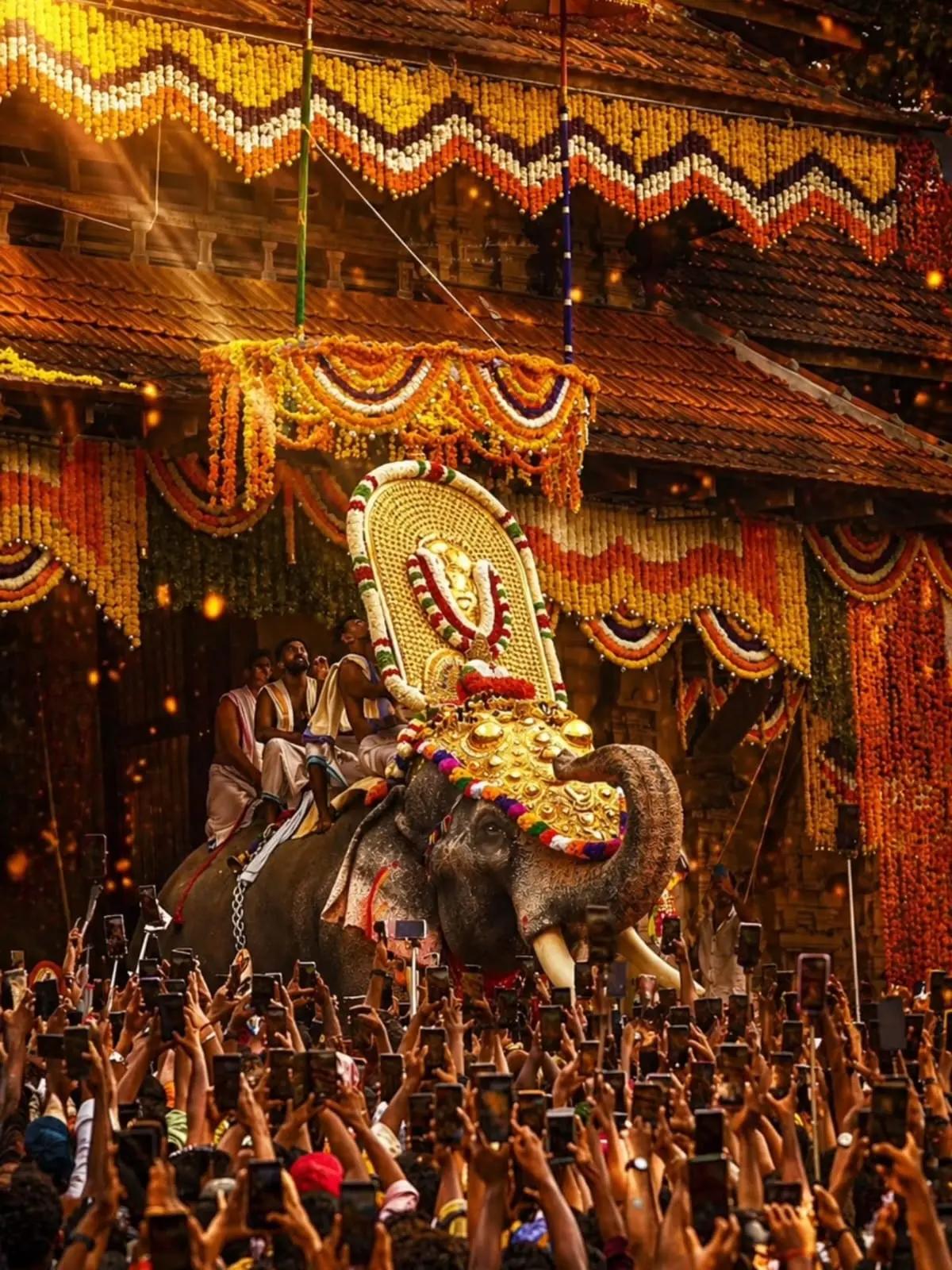
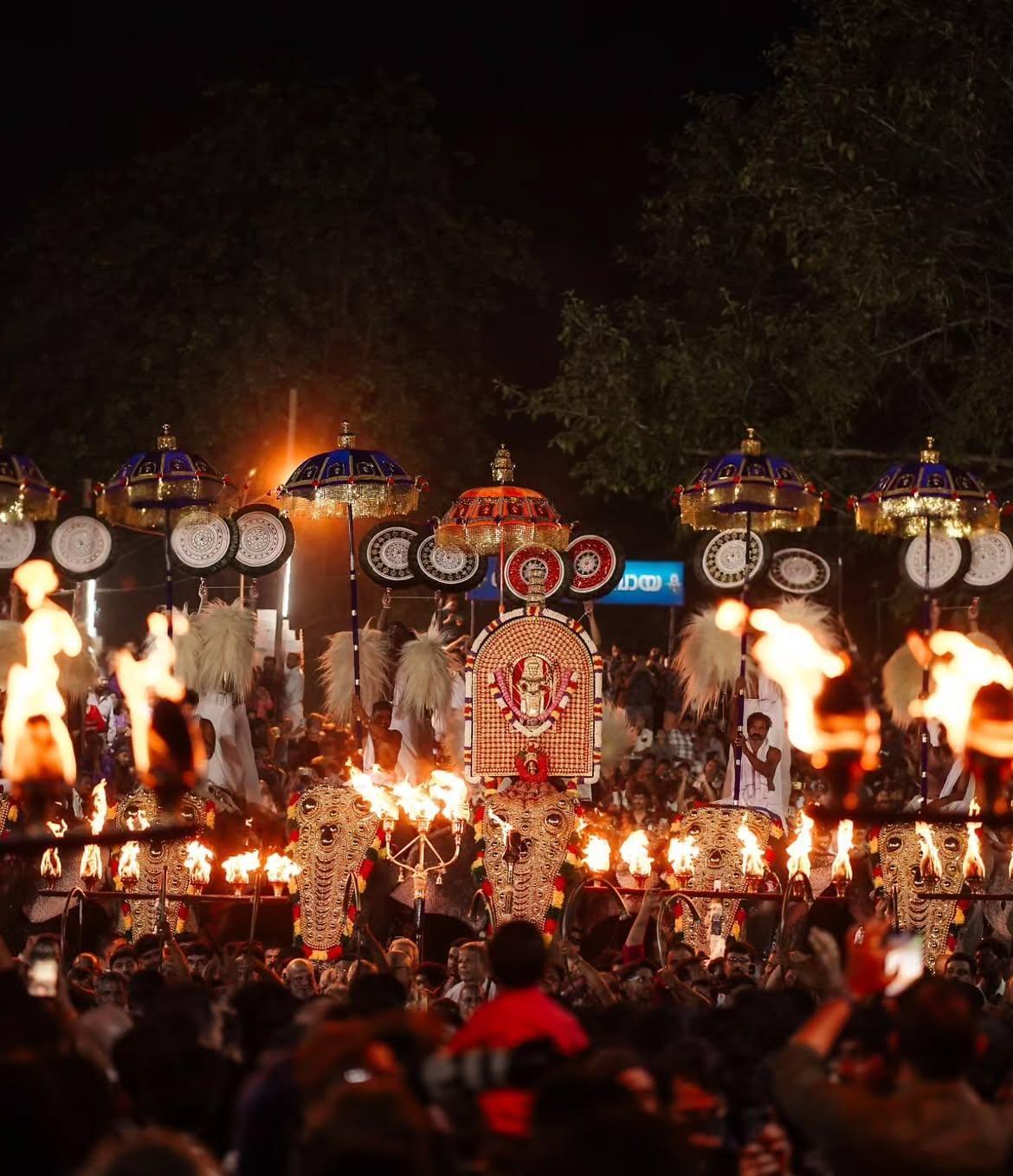
Once a year, in the Malayalam month of Meenam (around March–April), the temple hosts the Peruvanam Pooram. Deities from neighbouring temples arrive on caparisoned elephants, their foreheads covered in golden nettipattam. Silk parasols sway above them, oil torches flicker, and thousands of people press in close. Together with the nearby Arattupuzha Pooram, it belongs to the oldest family of temple festivals in the Thrissur region — the family from which bigger poorams, including the famous Thrissur Pooram, later grew.
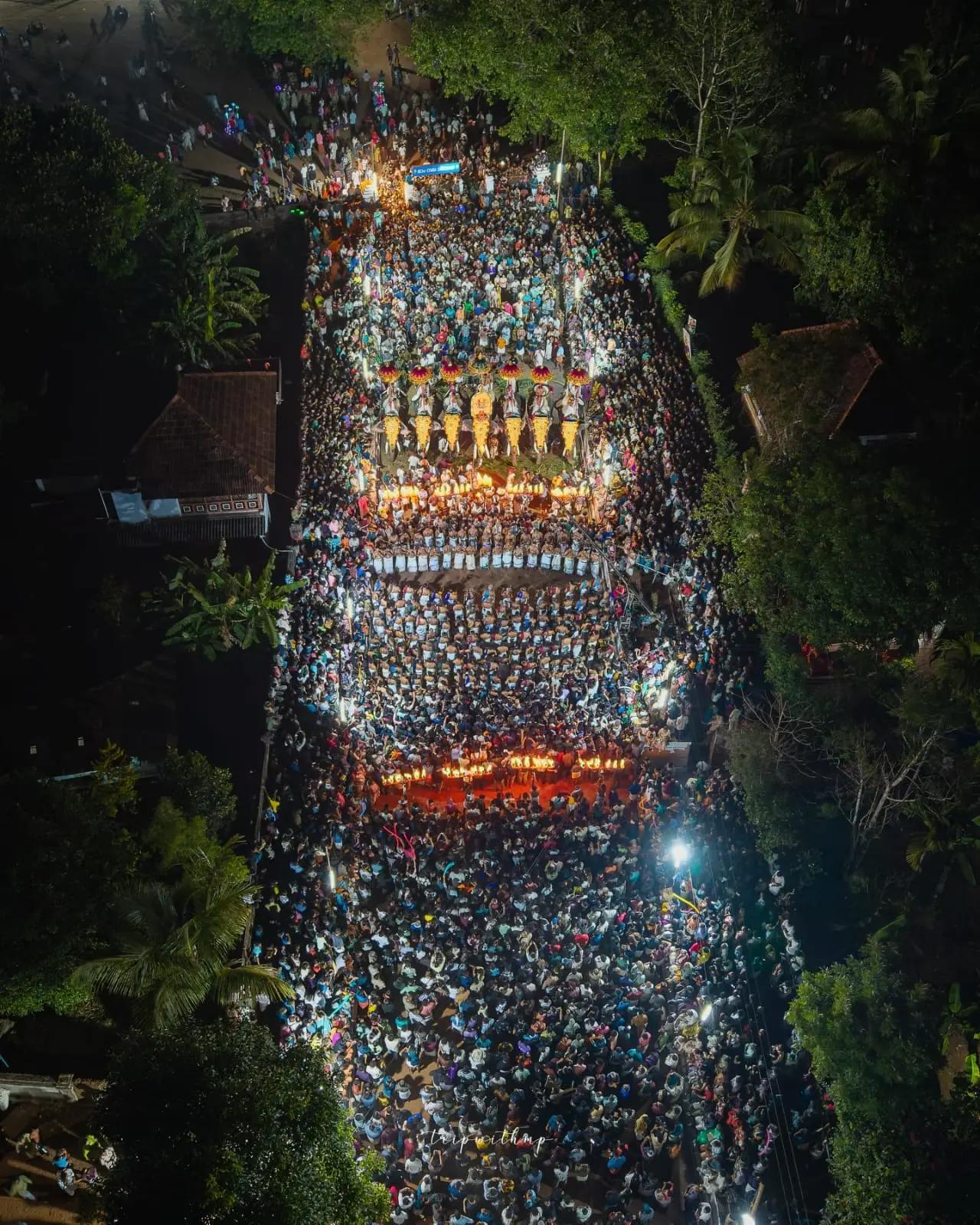
If you have never heard a Panchari Melam, here is the simplest way to understand it. It begins slowly, almost lazily, like a heartbeat at rest. Over the next few hours it moves through stages, each one faster and tighter than the last. The crowd starts tapping, then waving, then raising their hands in the air. By the end, a hundred or more drummers and cymbal players are moving as one body, and you feel the sound in your chest more than you hear it with your ears. Nobody rushes it. That patience is the whole point.
What makes Peruvanam special is not only the festival, but the people who carry it. Many of Kerala's most respected melam leaders have come from this village or trained in its tradition, and some carry the name 'Peruvanam' with them wherever they play. Children start young, practising on stone or wood before they ever touch a drum. Learning here is less like attending a class and more like growing up inside a song.
Visiting is easy. Thrissur is the nearest big town and railway station, and Cherpu is around half an hour away by road. Pooram dates follow the Malayalam calendar, so check them each year with the temple before you travel. Dress modestly, follow the temple's customs, and give yourself time. Peruvanam does not reveal itself in a hurry; it rewards people who stay a while and listen.
That habit of listening is exactly why the Peruvanam International Village Festival began here. A village whose people will stand for hours to follow a slowly building rhythm is a village that knows how to follow a long story, a difficult idea or an honest conversation. PIVF did not bring culture to Peruvanam. It simply invited writers, filmmakers, musicians and thinkers from around the world to sit down in a place that has always lived it.
The next edition of PIVF runs from 8 to 10 January 2027 at the Sreelakam Lifelong Learning Institute in Cherpu, just a few minutes from the temple whose drums made this village known across Kerala. Come for the conversations, stay for the music, and walk the lanes in the evening. You may hear the first slow beat of a chenda somewhere behind the trees — and then you will understand Peruvanam.
About the author
PIVF Editorial Desk
The Journal, Peruvanam
The PIVF Journal is written and edited in Peruvanam by a small desk of writers, translators and archivists who spend the year reading around the festival — so that the conversation never has to stop in February.