Thrissur Pooram is the festival all of Kerala talks about. But behind the elephants, the parasols and the fireworks is a quieter story — of tiger dancers, ritual fire, village temples and a drumming tradition that began a few kilometres south, in Peruvanam.
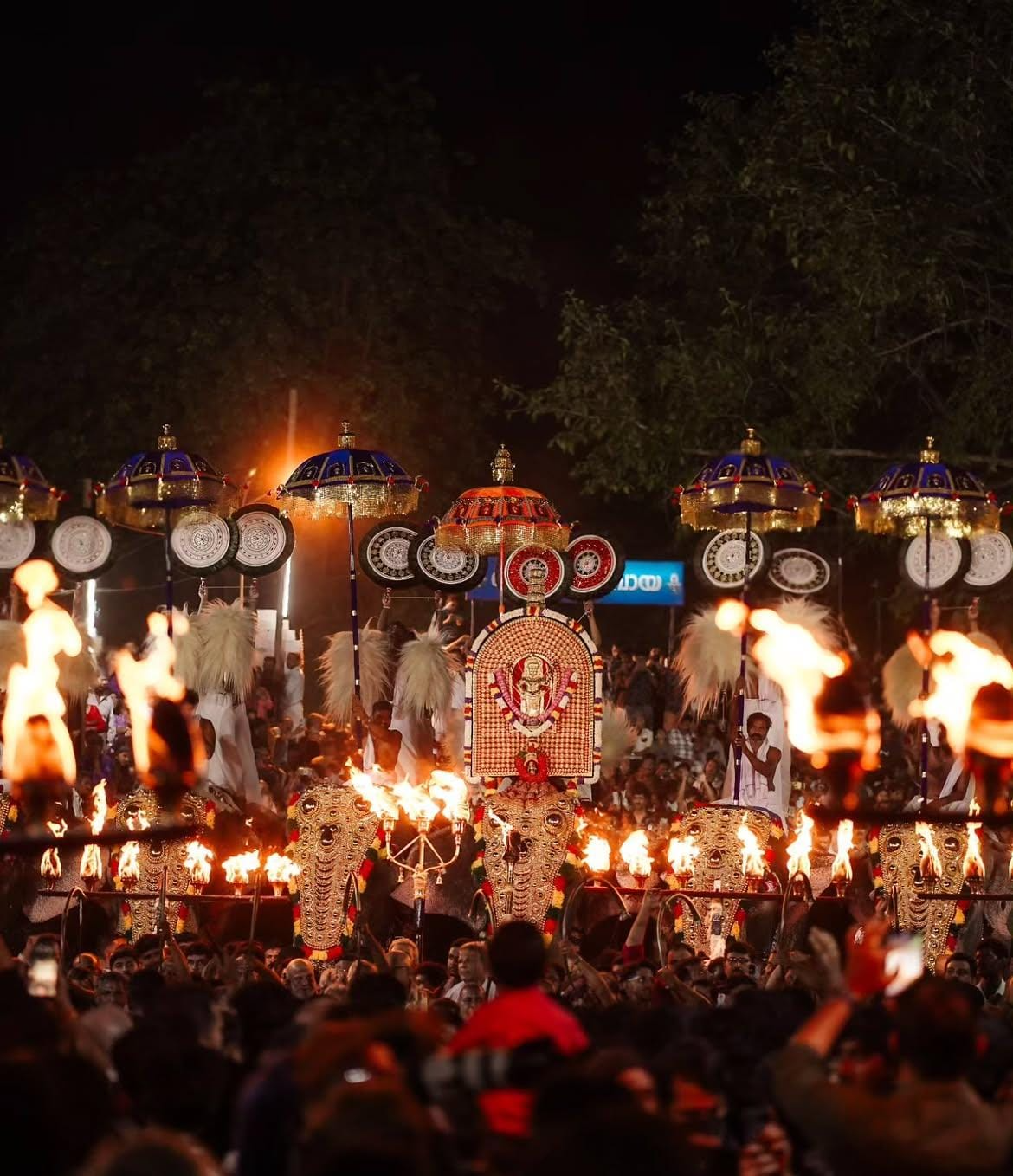
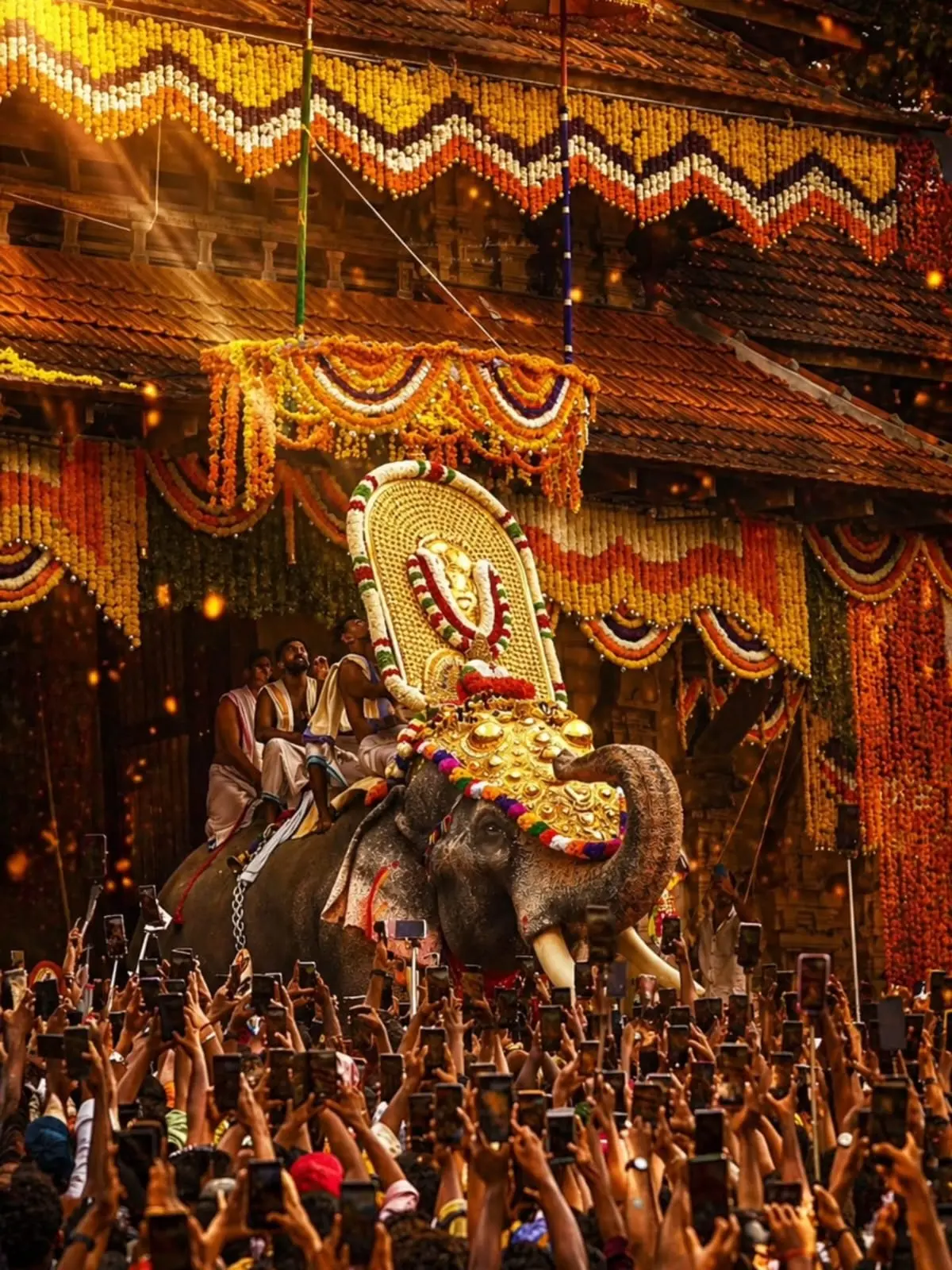
Imagine standing on the Thekkinkadu Maidan on a hot afternoon in April or May. The air is thick, the ground is packed shoulder to shoulder, and in front of you rows of elephants stand draped in gold. Then, all at once, hundreds of bright silk parasols rise above their heads and change colour in a single breath. The crowd roars. This is Kudamattam, one of the great moments of Thrissur Pooram — and if you have seen it once, you never quite forget it.
Thrissur is often called the cultural capital of Kerala, and it earns the name honestly. The city wraps around a hill crowned by the ancient Vadakkumnathan Temple. Nearby sit the state academies of literature, music and drama, and the fine arts. Through the year the city fills with exhibitions, performances, book launches and late-night debates over tea. Culture here is not kept in a museum. It walks the streets.
If Thrissur Pooram is the great stage, Peruvanam is the school and the soil.
The pooram itself is said to have been organised in its present form in the late eighteenth century by Sakthan Thampuran, the ruler of Kochi. He brought together the temples around Thrissur, led by Paramekkavu and Thiruvambady, into one grand celebration in front of Vadakkumnathan. Two 'teams' of temples, two processions, friendly rivalry, elephants, the famous Ilanjithara Melam under an old tree, and fireworks that light up the sky well past midnight.
But here is the part many visitors never hear. Before Thrissur Pooram became the giant it is today, the biggest temple gathering in the region happened a short drive south, near Cherpu — at Arattupuzha and Peruvanam. Those older poorams were the meeting ground for gods, villages and drummers long before the city's festival. Many accounts describe Thrissur Pooram as growing, in part, out of that older tradition.
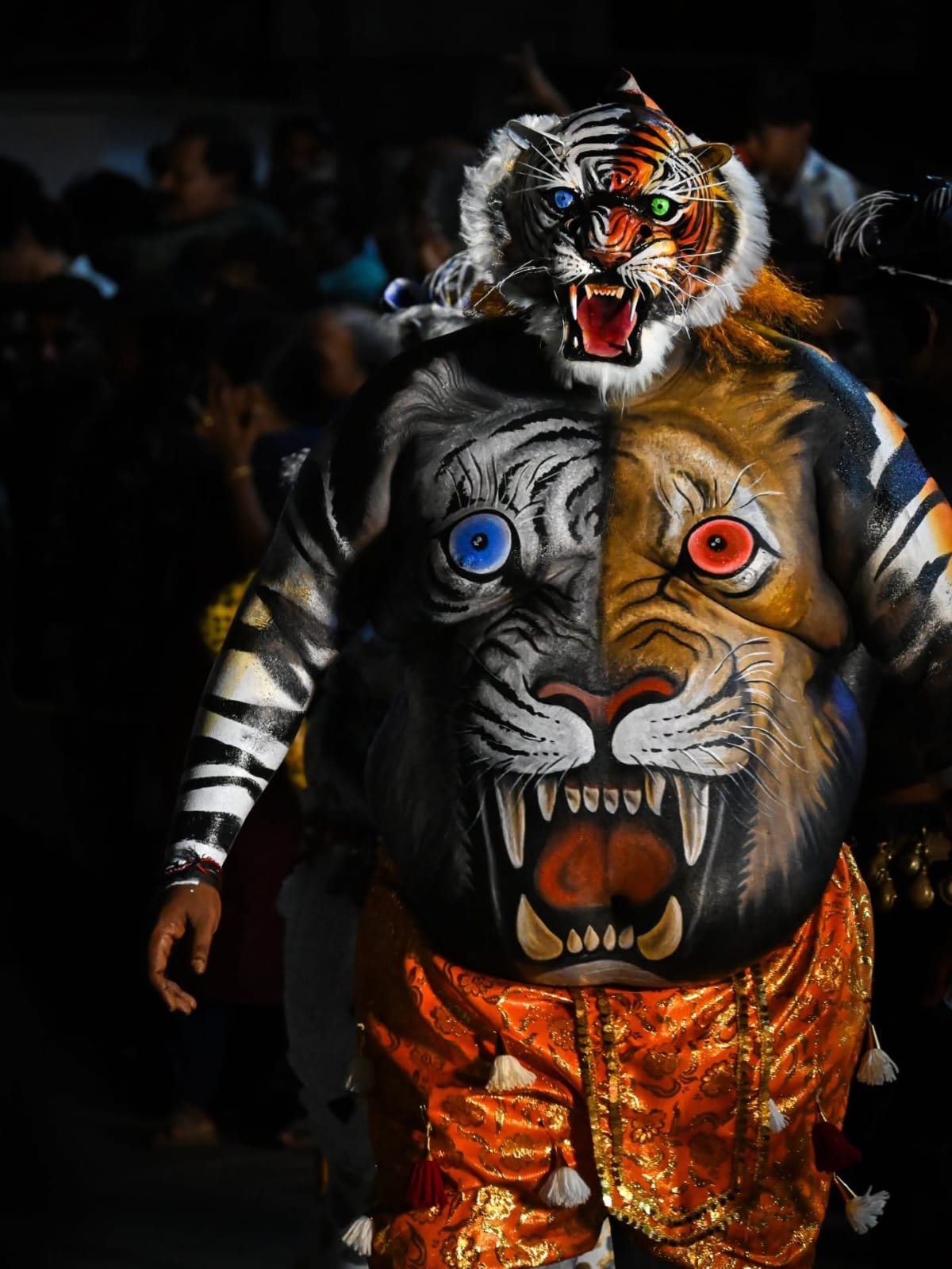
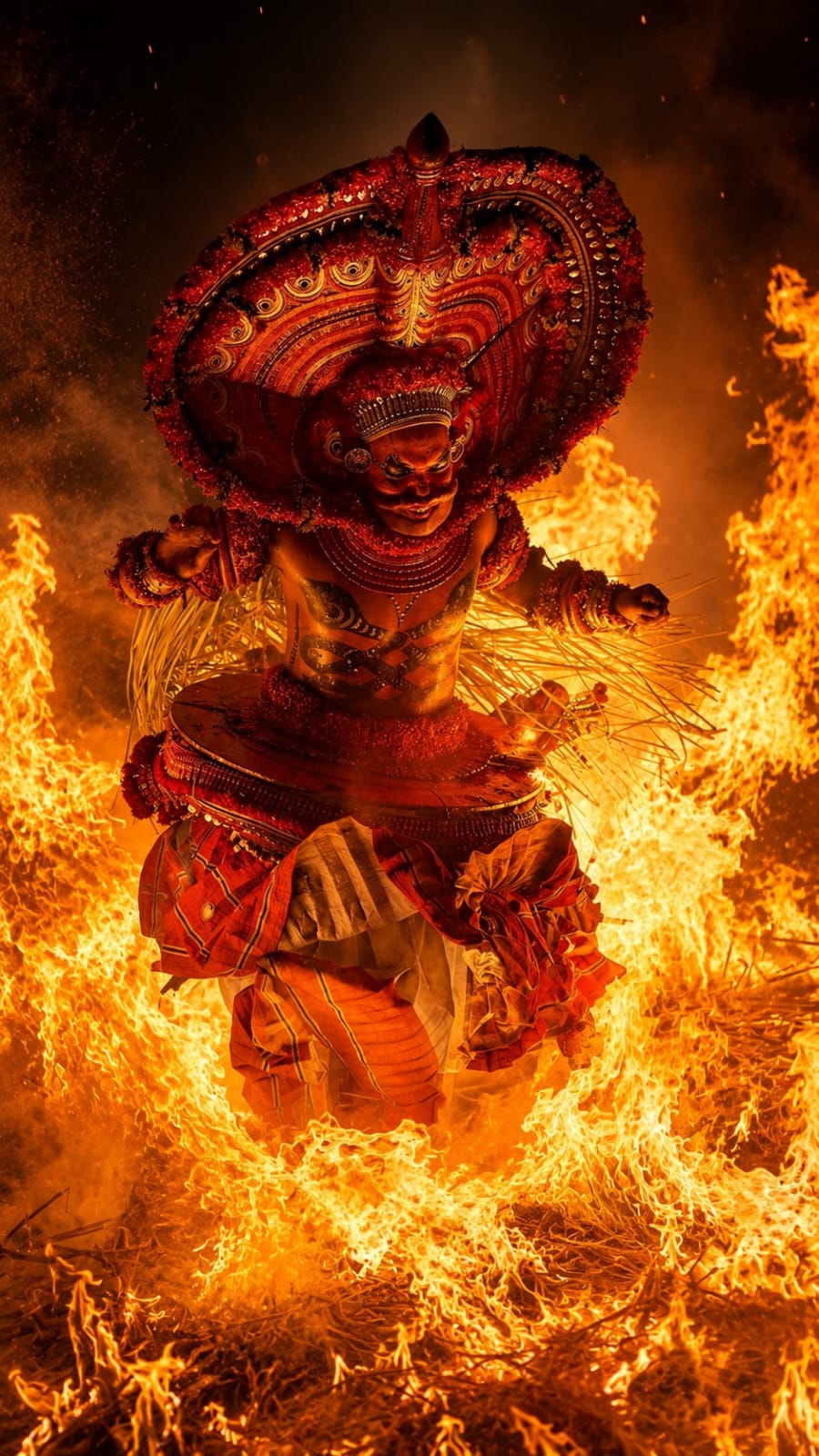
And Thrissur's culture does not stop with the pooram. During Onam, the streets fill with Pulikali — men painted from head to toe as tigers, bellies rolling, dancing to the beat of drums while families cheer from the pavements. In village temples across the district you will find Kathakali and Koodiyattam performed through the night, floor drawings of goddesses in coloured powder for Kalamezhuthu, and ritual performances lit by fire that feel older than memory itself.
Ask anyone who has stood under the Ilanjithara tree what they remember, and they will usually talk about the sound. That sound is Peruvanam's gift. The village near Cherpu has given Kerala generation after generation of chenda artists, and many of the masters who lead the great melams of Thrissur learned in that tradition. Anyone moved by the Ilanjithara Melam is hearing a discipline that Peruvanam has kept for centuries.
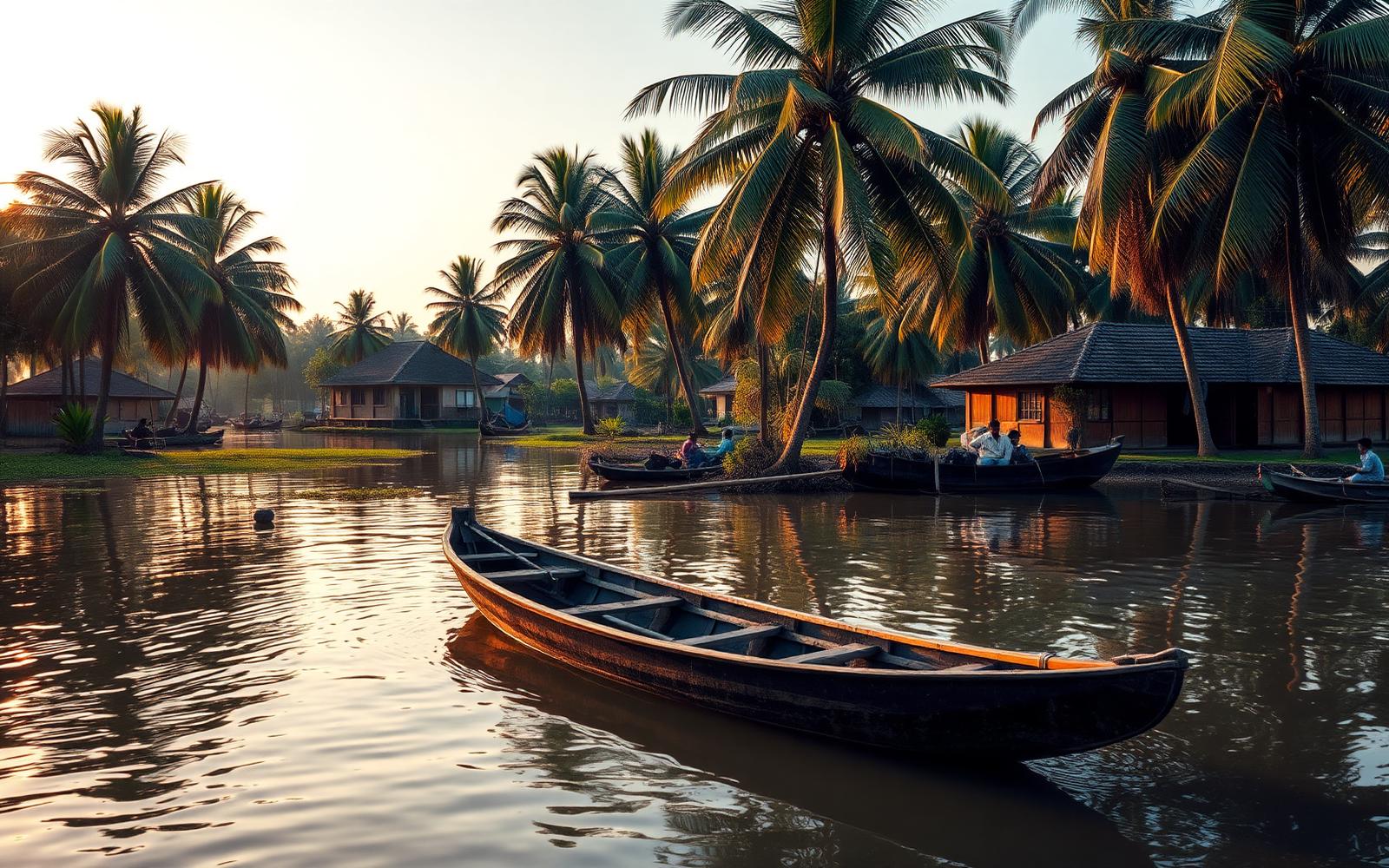
So if Thrissur Pooram is the great stage, Peruvanam is the school and the soil. The city shows you the spectacle; the village shows you where it comes from. The best way to understand Thrissur, then, is to step outside the city for a day or two — to walk the lanes of the villages where these arts are still practised by ordinary people as part of ordinary life.
Planning a trip? Thrissur is well connected by rail and road, and Cherpu and Peruvanam are around half an hour south. Pooram dates follow the Malayalam calendar and change each year, so check before you travel. For a gentler first visit, come in the cool months of winter, when the village is calm and its doors are open to conversation.
That is exactly when the Peruvanam International Village Festival takes place. PIVF brings writers, filmmakers, musicians and thinkers to the drum village south of Thrissur, for three days of talks, performances and shared meals. The next edition runs from 8 to 10 January 2027 at the Sreelakam Lifelong Learning Institute in Cherpu. If Thrissur Pooram is Kerala's loudest celebration, PIVF is where you sit down, listen, and discover where that celebration began. To know the village itself, read our companion story on Peruvanam.
About the author
PIVF Editorial Desk
The Journal, Peruvanam
The PIVF Journal is written and edited in Peruvanam by a small desk of writers, translators and archivists who spend the year reading around the festival — so that the conversation never has to stop in February.
Related reading