Coloured powder poured by hand into a deity, sung to life, then wiped away before dawn. Kerala's most impermanent art and the families who keep it breathing.
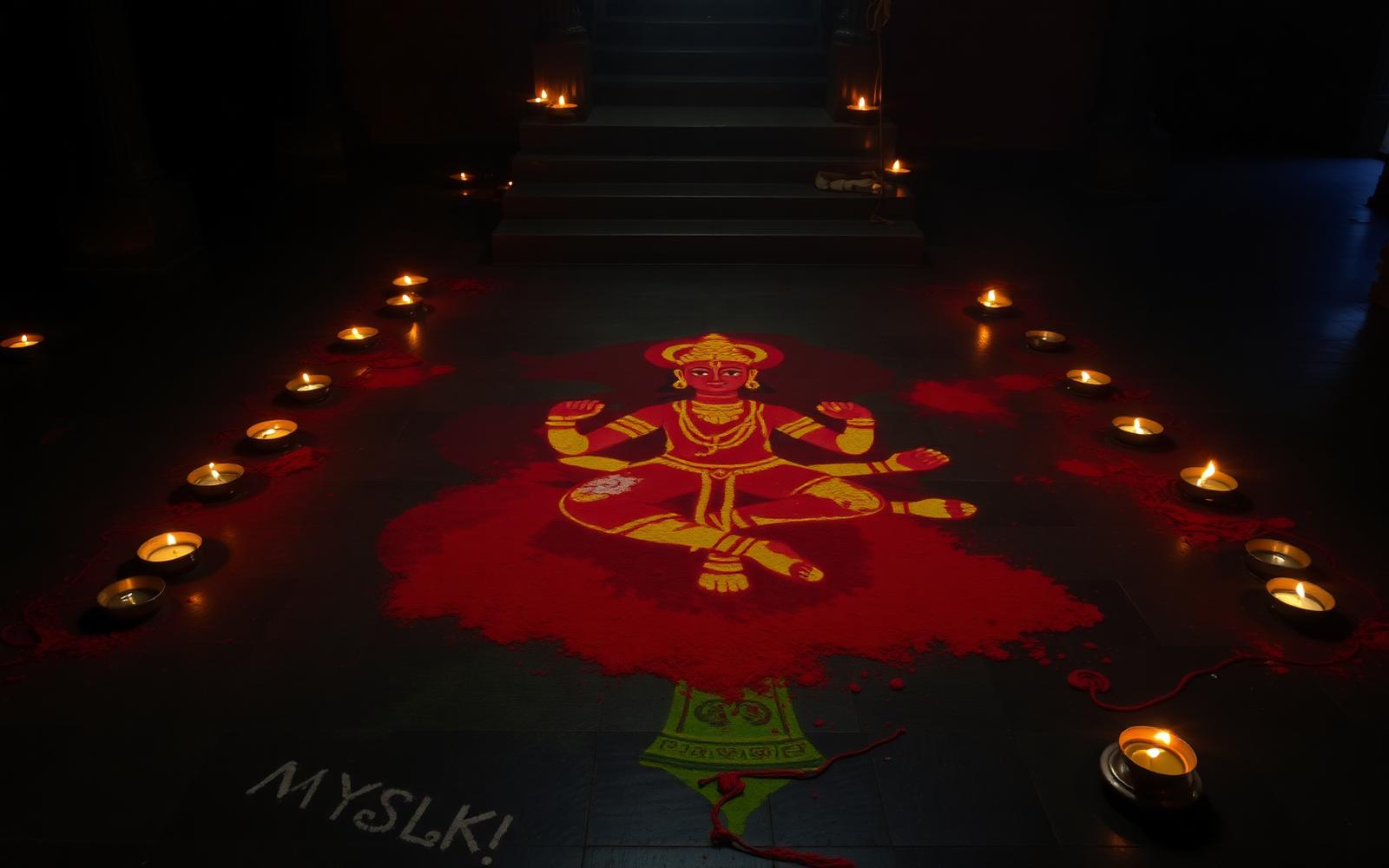
Five powders: rice for white, turmeric for yellow, burnt husk for black, lime and turmeric for red, dried leaf for green. No stencil, no sketch, no correction. The figure grows outward from a centre line drawn by memory, on a floor, in a room lit by oil lamps.
Then, having taken most of a day, it is sung to. And then, having been sung to, it is deliberately destroyed — swept up by the same hands that made it, before the night is over.
A photograph of a kalam is not a kalam.
It is tempting to read this as a lesson about impermanence, and the artists usually resist that reading. For them the erasure is not poetry; it is procedure. The image was made for a purpose, the purpose is complete, and leaving it would be leaving something powerful lying around.
The endangerment is not mystical either. It is arithmetic: the number of families who hold the songs and the proportions, the number of temples still commissioning the ritual, the number of young people for whom a full night's work has an economic future.
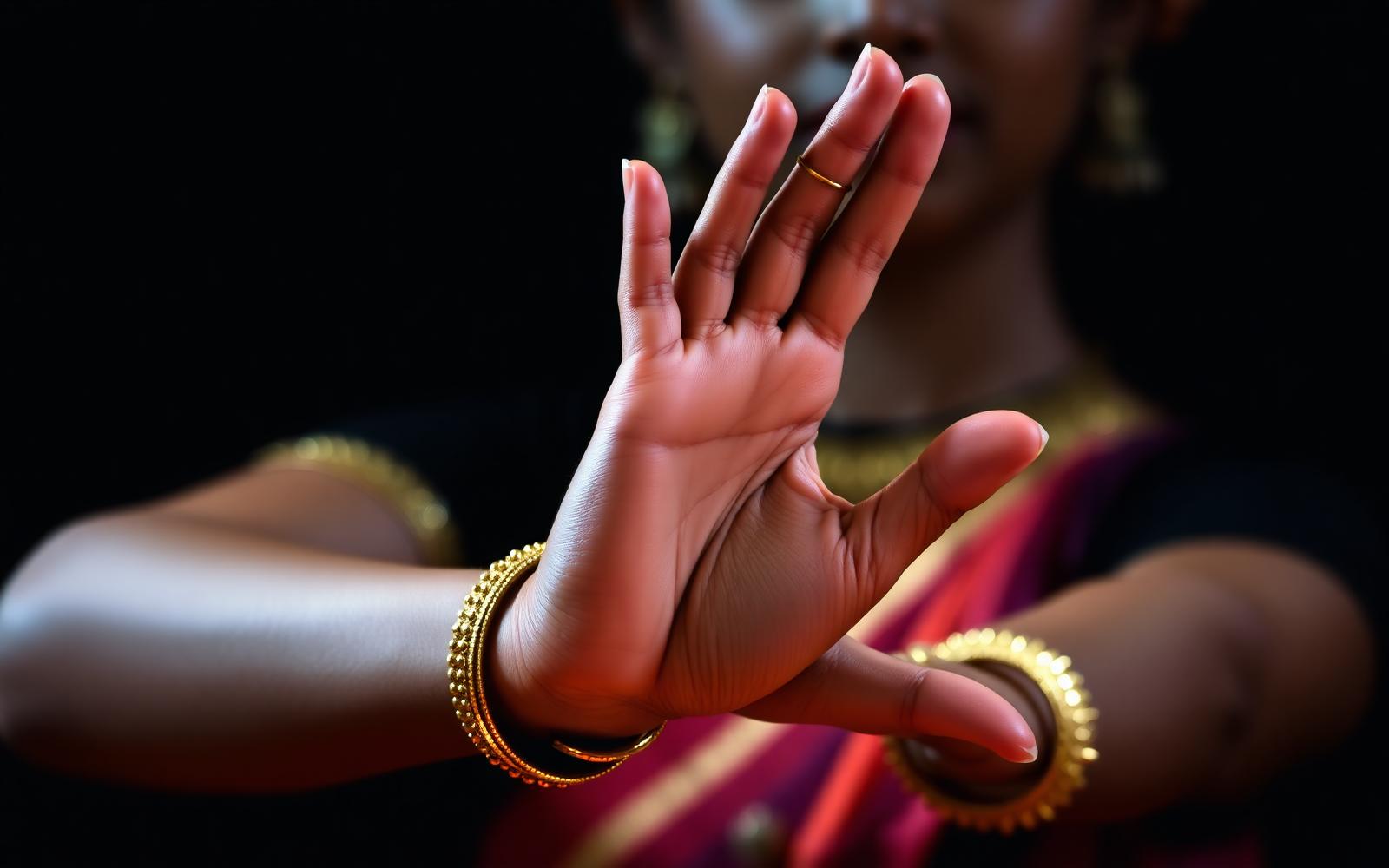
Documentation helps, but a photograph of a kalam is not a kalam. What has to survive is the hand that knows how far the powder falls.
About the author
PIVF Editorial Desk
The Journal, Peruvanam
The PIVF Journal is written and edited in Peruvanam by a small desk of writers, translators and archivists who spend the year reading around the festival — so that the conversation never has to stop in February.
Related reading