A close study of mudra across ritual, sculpture and stage — and how a single gesture can hold an entire cosmology.
Before a Kathakali actor speaks a single word — and he will not — his hand has already named a river, a lineage, a betrayal and the time of day.
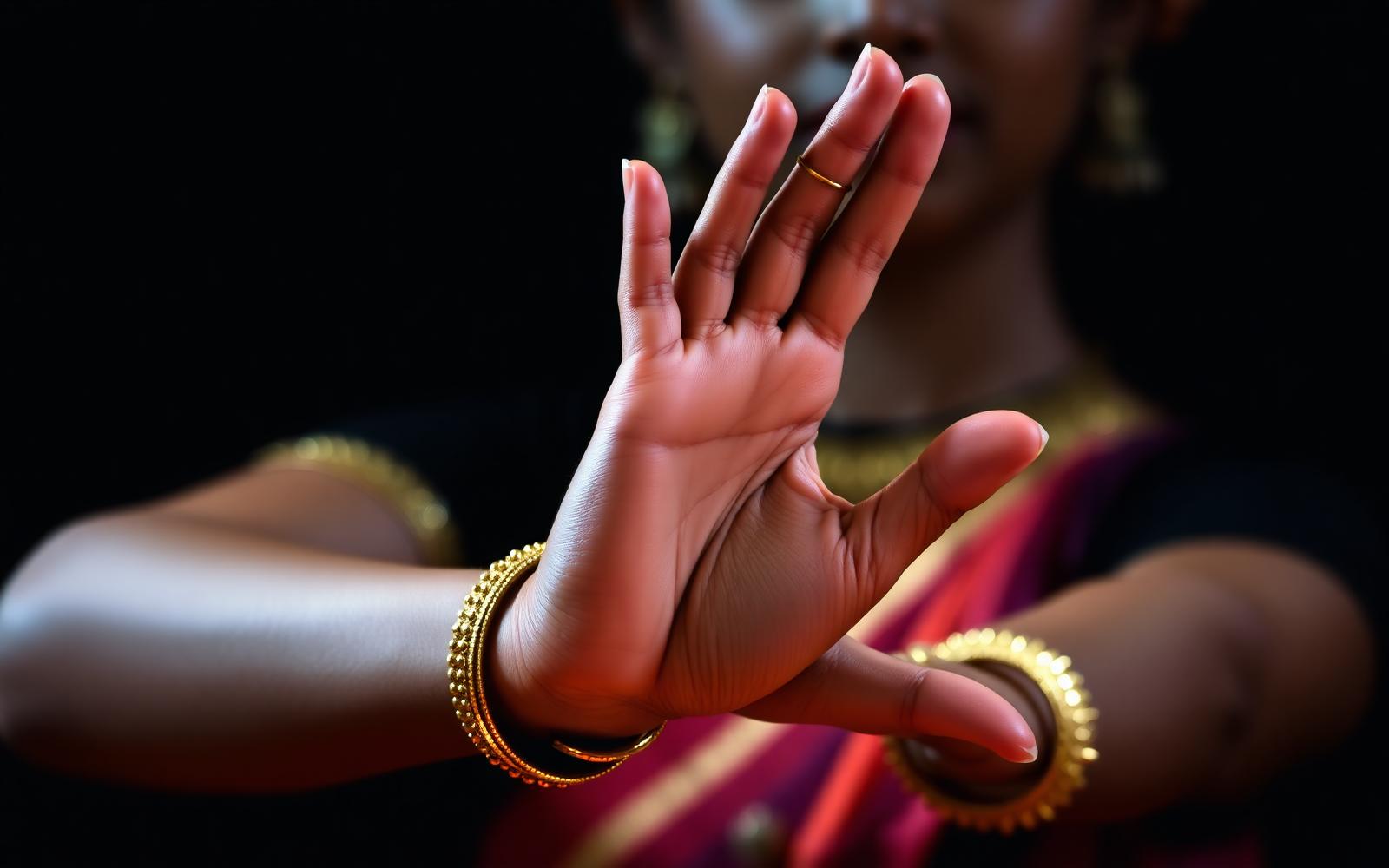
The mudra system is often described as sign language. That undersells it. Sign language substitutes for speech; mudra does something speech cannot, holding a literal meaning and a mood in the same shape, so that the gesture for 'lotus' is also the gesture for a particular quality of attention.
Preserve the audience and you preserve a language.
In Kerala the vocabulary is codified in the Hastalakshanadeepika, and the training is famously physical: the eyes trained separately from the fingers, the fingers separately from the wrist, years spent making a hand articulate the way a voice is trained to be articulate.
What is worth noticing is that the audience is trained too. A village crowd at Peruvanam reads these gestures the way a literate reader reads a page — fast, unconsciously, with pleasure in a well-turned phrase. That literacy is itself heritage, and it is more fragile than the art form.
Preserve the dancers and you preserve a repertoire. Preserve the audience and you preserve a language.
About the author
PIVF Editorial Desk
The Journal, Peruvanam
The PIVF Journal is written and edited in Peruvanam by a small desk of writers, translators and archivists who spend the year reading around the festival — so that the conversation never has to stop in February.
Related reading